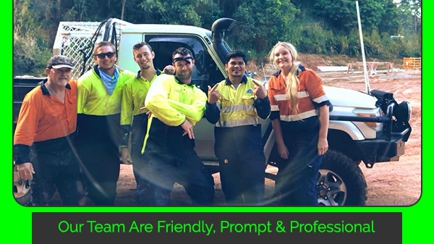

Spillers Quality Corrosion Control

43 Years
in Business

2 Years with
Yellow Pages


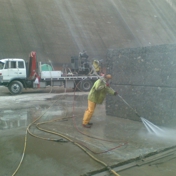
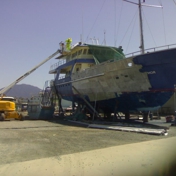
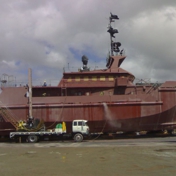
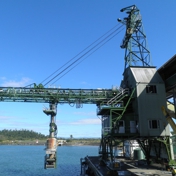
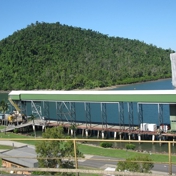
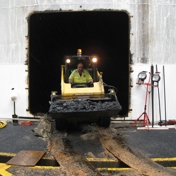
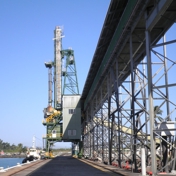

Abrasive blasting, protective coatings, internal pipe blasting and coating, ultra-high pressure water blasting up to 45,000 psi.
The team at Spillers Quality Corrosion Control are passionate about abrasive blasting. We love everything about it: the gleaming finish on steel, the eye-catching creative finishes you can create with concrete, and the sheer power of it! We are also passionate about service. We are committed to providing all of our clients in Portsmith with service of the highest standards. Whether we are working on your home driveway or a stadium, we will always maintain outstanding quality workmanship. We will advise you on the best ways to maintain the desired finish of your blasted surface. There is always someone friendly and professional waiting to take your call at Spillers Quality Corrosion Control. Spillers Quality Corrosion work together with external coating inspectors and offer 10-15 year warranties on specified coating systems in conjunction with the paint manufacturer. All readings are monitored and recorded for both internal auditing and external auditing purposes. Our clients are varied, offering a broad variety of products and having our own owned and operated equipment ranging from water pressure cleaning from 3,000 psi up to ultra high-pressure water blasting at 45,000 psi, the largest blasting booth in North Queensland, compressors from 150cfm to 900cfm, mobile wet and dry blasting units, internal pipe blasting and coating equipment.
To ensure your newly constructed steel surface maintains its superb finish for as long as possible, Spillers Quality Corrosion Control provides protective coatings. An abrasive blast followed by a quality two pack epoxy/urethane coating system makes for a more durable surface. Two newly obtained plural component proportioned units for spraying polyurethane and polyurea coatings. Contact your local experts for abrasive blasting and metal coating today.
If there is a word that defines the services provided by Spillers Quality Corrosion Control, it is quality. We are dedicated in offering a complete solution that will provide the precise finish you are after. Spillers Quality Corrosion Control operates quality assurance utilising Inspect QA app via a tablet. Whether you are coating metal for protection or for aesthetic appeal, we can help. Give us a call today for more information.
Spillers Quality Corrosion Control also has mobile units for abrasive blasting. Spillers Quality Corrosion Control has a Hammelman 45000 PSI, ultra-high pressure water blaster bringing Spillers up to date with the latest technology. Recently acquired Conjet 324 blasting robot remote controlled, Conjet Nalta Jet frame 101 and Blastrac Model MK111 mobile blasting unit with a vacuum.
What is galvanising suited for?
Galvanising must be compared only with one prime coat of inorganic zinc. Further coats of paint are an additional coast for both protection systems. These numbers serve to remind us that hot dip galvanising is well suited for protection items such as piping, footplates, kick plates, safety rails, purlins, girt, bolts, light trusses and tubular sections, where the steel has a high surface area / tonne.
What is galvanising?
Simplistically, galvanising is the result of the application of molten zinc to steel to form an amalgam of zinc with iron. Actually inorganic zinc coatings (hereinafter simply referred to as IOZ) and galvanising should not be treated as competitors but rather as complimentary, since both offer excellent protection in the applications for which they are best suited.
Has galvanising been proved unsuccessful in the past?
There is also considerable evidence within Australia, for example in coal washeries, where galvanising alone has been used unsuccessfully. Such as at South Backwater, Saxonvale, have shown dramatic depletion of zinc to the point of rusting and major repaints have had to be conducted.
Similarities and differences between galvanise or not to galvanise?
They are not continuous films as with galvanising but in fact consist of zinc particles cemented in a bed of siliceous material. The word cement is not used lightly since complex reactions occur between the zinc metal, the silicate liquid and the atmosphere so that what is a relatively porous open structure of zinc metal particles when first aid applied becomes a dense, tightly bound cementitious like matrix structure over time.
Do inorganic zinc coatings have longer life than galvanising?
This is a major difference and is an important reason why under difficult corrosive conditions (tropical marine structures, coal wash plants etc.), the inorganic zinc coatings will have much longer life than galvanising. This has been proven to be the case not only in the laboratory, but also in the field. The literature discusses this in more detailed.
Can we know something about galvanise or not to galvanise debate?
This is the debate that arises regularly every ten years or so. Fortunately, the facts which have been known for some time make the issues clear. We represent them here once again, is that the uninitiated amongst us can clearly see the issues from the, at times, aggressive marketing campaigns put forward by one side or the other. In fact inorganic zinc coatings and galvanising complement each other, both in their appropriate areas of application provide long term protection of steel.
Tell us something about inorganic zinc silicate coatings?
Zinc Silicates were first practically used in the 1940's, over 50 years ago and their performance is well proven. Inorganic zinc silicate coatings should not be considered as a metallic coating because they have a vastly different structure compared to galvanising. Fully cured inorganic zinc is extremely hard and damage resistant because of the hard rock like characters of the zinc silicate matrix. This results in many inorganic zinc having a harder and more zinc obtained by galvanising.
How can I contact Spillers Quality Corrosion Control by phone?
You can contact Spillers Quality Corrosion Control on (07) 4212 4114.
Where is Spillers Quality Corrosion Control located?
Spillers Quality Corrosion Control is located at 36 Buchan Street, Portsmith, QLD 4870.
How can I email Spillers Quality Corrosion Control?
You can email Spillers Quality Corrosion Control at [email protected].
Does Spillers Quality Corrosion Control have a website?
Yes. You can visit Spillers Quality Corrosion Control online at https://spillersqcc.com.
What are the opening hours for Spillers Quality Corrosion Control?
The opening hours for Spillers Quality Corrosion Control are Mon - Fri: 7:00 am - 3:30 pm.
What type of business is Spillers Quality Corrosion Control?
Spillers Quality Corrosion Control is listed under Home Air Conditioning, Abrasive Blasting, Demolition Contractors, Fishing Trips, Painters & Decorators, Waterproofing Contractors.
What payment methods does Spillers Quality Corrosion Control accept?
Spillers Quality Corrosion Control accepts invoicing available, visa, mastercard.
Can I request a quote from Spillers Quality Corrosion Control?
Yes. You can request a quote from Spillers Quality Corrosion Control on this page.
Is Spillers Quality Corrosion Control on social media?
Yes. You can follow Spillers Quality Corrosion Control on Facebook and YouTube.
Is Spillers Quality Corrosion Control locally owned?
Yes. Spillers Quality Corrosion Control is a locally owned business.