
Fred Cole Piano Tuning & Repairs

45 Years
in Business


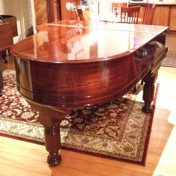
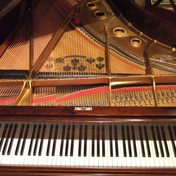
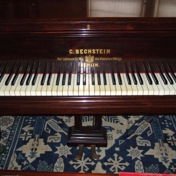

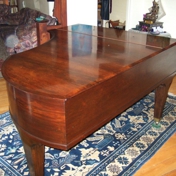
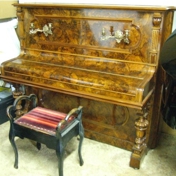
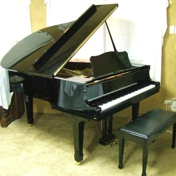
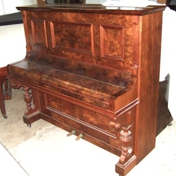

Our aim is to match each individual instrument to the specific requirements of our discerning customers.
We are based in Lismore, a University City located in the coastal region of Northern New South Wales, Australia. We pride ourselves in the quality of our workmanship. Since 1981 we have specialised in locating and restoring/rebuilding the very best instruments produced by quality piano manufacturers over the last one hundred and twenty years.
If you want a particular model from a well-known brand in a particular colour or case style, just let us know. We will try our best to find it for you.
2 crown Lipp and Ronisch upright pianos have always had a good reputation with piano teachers and musicians in Australia. They were expensive, quality instruments with a strong and resonant tone. We always try to have a few examples of these pianos in stock, as well as preloved Yamaha and Kawai modern uprights. We specialise in full rebuilds for quality antique Steinway and Bechstein grand pianos, and we hire out grand and upright pianos for concerts.
 PhD in music compositionServing the North Coast for 35 years
Specialty Pianos
Why does my piano need to be in concert pitch?
All 'concert pitch' means is that the notes on your piano will sound the same as the notes on a fixed pitch instrument, such as a xylophone or a saxophone, or even a digital piano. It is especially important for singers, otherwise they may well learn to sing in the wrong key! If your piano is not tuned for a number of years, the pitch will drop each year by about a 1/10th of a semitone.
How often does my piano need tuning?
Firstly, how much variation in temperature and humidity the piano has been exposed to, and secondly how sturdily the piano has been built. Generally, the larger the piano, the less often it will need tuning. In the Northern Rivers region, a yearly tuning should suffice for most ears. The playing of the piano, even virtuosic pieces does not go out of tune, unless either the tuning pins are loose (often repairable) or the tuner hasn't set the pins properly.
Why buy an acoustic piano when I can buy a digital piano, which won't require tuning or maintenance?
I know of not a single would-be piano player who started on a keyboard who ever became a competent pianist. When kids start to learn, they need to feel the vibration in the air when they hit a note. There is something very organic about the sound of felt hitting the steel string, amplified by the close grained spruce resonance of the soundboard. Not all pianos are created equal. My job is to find the special ones and lovingly restore them, until you are ready to have them join your family!
Why should I choose a member of the Piano Tuners and Technicians Guild to service my piano?
Members of the guild have passed a rigorous aural tuning test and had their workshop skills examined and certified. As a guild member I attend regular conventions where overseas lecturers update our skills with the latest in tools and technology.
What is regulation?
Regulation is the adjustment in height, angle and tolerance of all the moving parts of the piano action. Each key in an upright action has up to 10 adjustments, including key height, key dip, damper lift, set off, hammer blow, catch distance, hammer spacing and traveling, capstan lost motion and catch. Each key in a grand action has 31 different adjustments. Every tuning should include a check of any regulation issues that may lead to future action problems or excessive wear.
Why do some notes sound louder/brighter than others?
Some notes get more use than others, because players practice the same piece over and over again. The felt hammers get grooves in them where they have been hitting the strings. The felt becomes compressed, and eventually hardens, so it sounds brighter, and often louder. When this happens, it is very difficult to play softly and control tone. This is fixed by 'voicing', the process of needling the hammers to produce the desired tone and volume. This should only be done by a skilled professional.
Why do the keys on my piano stick in wet weather?
The felts in the two slots in the keys (called the 'key bushings') have swollen up and are gripping the pins on which the key rides with too much friction (and/or the pins themselves are corroded). 2) One or more of the 3 to 7 hinge pins in each note of the piano action itself are binding, due to a build-up of dirt and moisture forming a sludge between the metal hinge pin and the cloth bushing in which it turns.
What should I use to clean and polish my piano?
The keys can be cleaned with a slightly damp microfiber cloth. Modern gloss finishes should be just wiped over with a damp chamois. Older style wood grain finishes should be polished with a beeswax or oil product, but never use anything with silicone in it (that includes most spray products). The pedals and hinges can be polished with Brasso & they will look like new if you have the patience!
What can I do to stop insects and rodents eating my piano?
The main enemies of your piano are rag moth (sometimes known as 'case moth'), cockroaches and mice (rats even, in extreme bush settings!). I recommend getting two 30cm squares of an old cotton sheet, placing Naphthalene flakes in the centre, bunch it up, tie it off, and hang it from a drawing pin on each side of the piano away from the action. If you replace this every four or five months, it is unlikely anything will get in and eat your felts.
How much will it cost to tune my piano?
This depends on how long it is since it was last tuned, whether the last tuner tuned it to concert pitch (A=440Hz), and how far away from my home base you happen to live! Travel costs are shared, so if a few people from the same area get together and have their pianos tuned on the same day, it will be cheaper. If your piano is below concert pitch, then it may be necessary to bring it up to pitch one or two times (called a 'pitch raise') before a final fine tune can be attempted.
06/08/2022
Fred is a passionate piano lover, restorer and tuner. His work is exquisitely honed. He is a magical piano tuner and restorer. We admire his commitment to excellence and his deep knowledge, plus he makes our piano sound incredibly good. Thank you Fred!